

Effective Telemarketing Techniques: 9 Methods That Turn Cold Calls into Conversations

Successful telemarketing starts with five essentials: targeting a researched list, delivering a relevant opening, asking the right questions, handling objections confidently, and following up within 48 hours. Every call must also comply with the Do Not Call and consent regulations of the target market.
Despite the growth of email and digital advertising, phone calls remain a powerful way to connect with prospects, answer questions instantly, and build trust. When combined with digital marketing, outbound calling becomes more effective because prospects may already recognize your brand.
This guide explores nine proven telemarketing techniques, compliance requirements in the US, UK, and Australia, key performance metrics to track, and when outsourcing to a dedicated outbound team makes sense. Our Philippines-based agents support outbound campaigns across all three markets, offering practical insights grounded in real campaign operations.
Telemarketing techniques are the repeatable methods a caller uses to reach a prospect, start a useful conversation, and move it toward a next step such as a demo, a quote, or a purchase. They cover everything from list building and call openers to objection handling and follow-up.
The channel splits into two broad types. Business-to-consumer calls reach individuals, run shorter, lean on scripts, and face tighter regulation. Business-to-business calls reach decision-makers inside companies, run longer, and depend on research and relevance. If your sales motion is B2B, the breakdown in outbound b2b telesales goes deeper on that model.
Why does the phone still work? It is the only outbound channel that gives instant two-way feedback. A caller hears hesitation, adjusts, and answers an objection before it hardens into a no. Calling doesn’t replace digital marketing. It finishes what digital marketing starts. A prospect who has read your blog post or clicked your ad arrives at the call already half-informed, which saves the caller from explaining the basics and lets the conversation start at the problem.
Use these effective telemarketing techniques as a sequence. Each one feeds the next, and skipping the early steps is the most common reason later steps fail.
Cold lists produce cold calls. Before anyone dials, confirm the company fits your ideal customer profile, find the right contact by name and title, and note one fact worth mentioning, such as a recent hire, a product launch, or a new office. Segment by industry or need so each group hears a relevant opener. Twenty minutes of research on a short list tends to beat a thousand blind dials, and it shows respect for the person who answers.
A short, plain email or a LinkedIn connection request a day or two before the call gives the prospect a reason to recognize your name. Marketing that earns attention, like the programs described in ecommerce inbound marketing services, also fills the call queue with people who already raised a hand. Call the ones who opened, clicked, or visited your pricing page first. Keep the email to four sentences and end it with one clear ask.
The first ten seconds decide the rest, and this is where most cold calling techniques succeed or fail. Say your name, your company, and why you are calling this person specifically, then ask for a moment. For example: “Hi Maria, this is Dan from Brightline. I saw your team opened a second warehouse in Texas, and I’m calling because we help distributors shorten delivery quotes. Do you have a minute?” Skip the weather chat and skip “How are you today?” Prospects hear that line as the start of a pitch.
Discovery questions turn a pitch into a conversation. Ask what the prospect uses now, what slows them down, and what would change if the problem went away. Two or three open questions are enough. Then repeat back what you heard in your own words. That proves you listened and hands you the exact language to use when you present the offer.
A script gives a new caller footing, but reading it word for word sounds like reading. Write the opener, the key questions, the top five objections, and the close, then practice until you can say them in your own voice. Callers who know the structure can follow the prospect’s lead and find their way back to it naturally.
“Not interested,” “Send me an email,” and “We already have a vendor” are not final answers. They are opening statements. Acknowledge the point, ask one question, and offer something small. If the prospect has a vendor, try: “That makes sense. What would you change about it if you could?” If the answer is nothing, thank them, ask permission to check back in a few months, and log it in the CRM. A graceful exit protects your brand and your list.
Many teams find that decisionmakers pick up more often early in the morning, around lunch, and late in the afternoon, though the pattern shifts by industry. Test your own windows by logging connect rates by hour. On global campaigns, schedule by the prospect’s local time, not yours, and stay inside the legal calling hours listed in the compliance table below.
Most deals need more than one touch. After a first conversation, send a short recap email the same day and call again within two days. Space further attempts across a couple of weeks, alternating voice, email, and social. Stop the moment a prospect asks you to. Persistence helps right up to the point where it becomes pressure.
Calls are the best training material a sales team owns. With notice and consent where the law requires them, record calls and review a handful per agent each week. Look for the moment the conversation turned, in either direction, and coach to that moment. Play a great call for the whole team instead of only correcting the weak ones.
Table 1: Cold, Warm, and Follow-Up Calls Compared
| Call Type | Starting Point | Main Goal | Best For | Watch Out For |
| Cold call | No prior contact | Earn permission to keep talking | New markets and tight ideal-customer lists | Higher hang-up rate and the strictest compliance exposure |
| Warm call | Prospect opened an email, visited the site, or clicked an ad | Confirm interest and book a meeting | Teams running inbound or paid campaigns | Waiting too long, after interest fades |
| Follow-up call | A prior conversation, demo, or quote | Move the deal toward a decision | Open deals and stalled opportunities | Repeating the same pitch word for word |
Most teams run all three call types at once. The mix matters less than keeping each call tied to what the prospect has already seen or said.
A simple call flow ties the nine techniques together. Adapt the wording to your own voice and offer:
Global campaigns live or die on compliance. One complaint can bring fines, and a poor reputation with phone carriers can make every number you own look like spam. The table below summarizes the main rules in the markets we call most. Treat it as a starting checklist, not legal advice, and confirm details with counsel before launching a program.
Table 2: Telemarketing Rules
| Market | Main Rules | Calling Hours | Check First |
| United States | Telemarketing Sales Rule, TCPA, and the National Do Not Call Registry; scrub lists against the registry at least every 31 days | 8 a.m. to 9 p.m., prospect’s local time | FTC and FCC guidance; donotcall.gov |
| United Kingdom | PECR and UK GDPR; no calls to numbers on the TPS or CTPS without consent; show your caller number | No fixed statutory window; stick to reasonable business hours | ICO guidance; TPS and CTPS lists |
| Australia | Do Not Call Register Act 2006 and the telemarketing industry standard; identify yourself and end the call when asked | Weekdays 9 a.m. to 8 p.m., Saturdays 9 a.m. to 5 p.m.; none on Sundays or national public holidays | ACMA Do Not Call Register |
| Philippines | Data Privacy Act of 2012 covers how prospect data is collected, stored, and shared; agents also follow the rules of the market they call | Follow the prospect’s market | National Privacy Commission |
Three habits keep telemarketing teams safe in every market. Scrub lists against the relevant registry before each campaign. Log consent and opt-outs somewhere every caller can see them. Identify yourself and your company at the start of every call. Business-to-business calls often get lighter treatment than consumer calls, but lighter is not the same as exempt, so check the rules for each country before you assume. Keep your records tidy too. When a regulator or a prospect asks why a number was called, a dated log of consent, list source, and call outcome is the fastest way to answer.
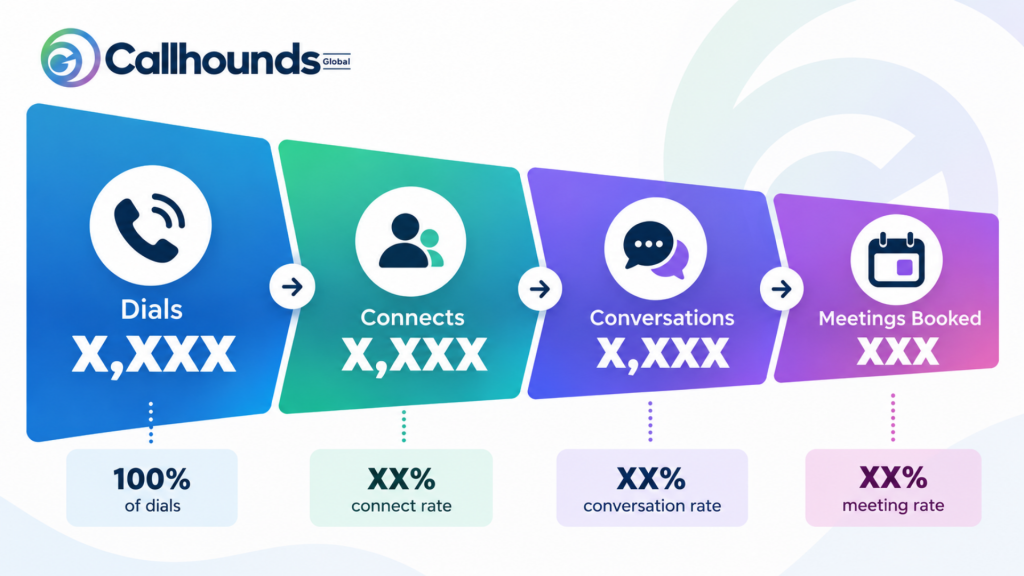
You can’t improve telemarketing techniques you don’t count. Track a short list of numbers every week and compare them with your own baseline from the first 30 days, not with someone else’s benchmark.
The numbers also tell you where to look. A low connect rate points to the list or the timing. Short conversations point to the opener. Meetings that book but never convert point to weak qualification.
An in-house team gives you direct control, but hiring, training, dialer software, and coverage across US, UK, and Australian business hours add up fast. Outsourcing trades some of that control for speed and a lower cost per seat, and a trained outbound team already drills these telemarketing techniques every day. The Philippines is a common choice for English-language outbound work because of strong English skills and a long record of serving North American, British, and Australian clients. The structure behind that model is explained in outbound b2b telesales.
The same logic applies to the marketing that feeds your call list. Many companies pair outbound calling with an offshore content and search team, a pattern covered in why outsource an seo specialist to the Philippines. Whichever route you pick, ask any partner for sample call recordings, a written compliance process, and a clear reporting schedule.
Good telemarketing is not about talking faster or pushing harder. It is about calling the right person, with a reason that fits them, and treating their time as limited. Put the nine effective telemarketing techniques above into a weekly routine, measure the results, and adjust one variable at a time.
If you would rather have a trained outbound team handle the calling, Callhounds Global builds dedicated telesales teams in the Philippines for companies in the US, UK, and Australia. Reach out to talk through your target market and call goals.
Key Takeaways
Start with five telesales techniques: research your list, open with a specific reason for calling, ask discovery questions before you pitch, answer objections with a question of your own, and follow up within 48 hours. New callers who master those five get better results than those who memorize a long script.
A first cold call often runs only a few minutes, because the goal is a booked meeting, not a closed sale. Warm calls and follow-ups run longer since the prospect already knows who you are. Let the conversation set the length, and end the call politely when the prospect signals they are done.
Yes, when callers follow the rules of the country they are calling. That usually means scrubbing lists against Do Not Call registries, calling within permitted hours, identifying the caller, and honoring opt-out requests. Rules differ for consumer and business calls, so confirm the details with legal counsel.
Many outbound teams plan six to eight touches over two to three weeks, mixing calls, email, and social messages. Adjust the number to your sales cycle, and stop at once if the prospect asks you to.
Yes, especially when paired with digital marketing. Email, search, and ads build recognition, and a well-timed call turns that recognition into a conversation. Telemarketing tips that rely on digital touchpoints, like calling people who already engaged with your content, usually produce warmer conversations than dialing cold.